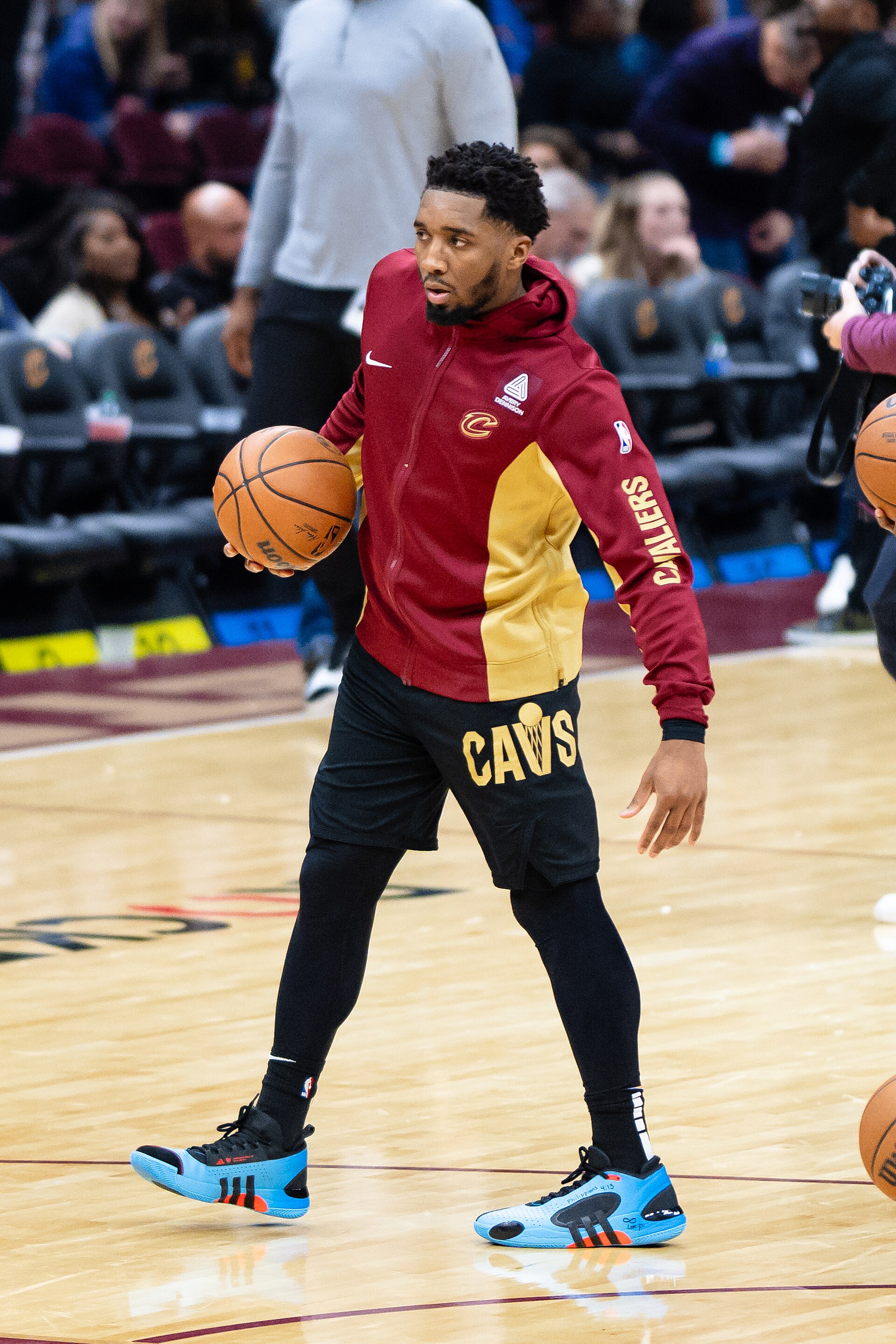
Well, fellow purveyors of advanced analytics and sideline tactical genius, the suspense that had Cleveland's faithful on the verge of developing stress-induced baldness has finally dissipated. Donovan 'Spida' Mitchell, the dynamic offensive engine, has officially committed his next four years, and a cool $273 million, to the Cavaliers. This isn't just a contract; it's a multi-season strategic allocation of capital designed to maintain a high-usage offensive hub, effectively extending the existing perimeter-oriented offensive architecture.
The rumor mill, as is its wont, had been churning faster than a broken washing machine on spin cycle. Whispers of Mitchell eyeing greener, perhaps larger market, pastures were so prevalent you could practically chart their xG (expected gossip) probability at an alarming rate. Had he bolted, the entire offensive ecosystem built around his isolation scoring and pick-and-roll mastery would have collapsed faster than a poorly executed zone defense. Fresh off the heels of the 'Brown Jumps Ship' drama that left Boston fans questioning contractual loyalty, Cleveland’s front office clearly wasn’t keen on a similar narrative. We heard unconfirmed reports of the Cavs’ GM, Koby Altman, having entire whiteboards dedicated solely to 'Mitchell Retention Protocols,' complete with flowchart diagrams on 'Optimal Max Contract Presentation Sequencing.' The man probably deserved a bonus just for the emotional labor.
The Geometric Conundrum: Spacing, Synergy, and Salary
Tactically speaking, Mitchell's extension solidifies the Cavaliers' backcourt-centric approach, which, from a pure positional value perspective, remains an intriguing, albeit somewhat counter-intuitive, proposition in a league increasingly dominated by wing versatility. The immediate impact is obvious: continuity. The offensive sets, the Garland-Mitchell two-man game, the occasional 'everyone clear out and let Spida cook' possession – all remain viable. The defensive implications, however, are where the true strategic chess match unfolds. While Mitchell provides sporadic bursts of defensive intensity, the long-term viability of a backcourt featuring two smaller guards hinges on elite rim protection (Jarrett Allen, Evan Mobley) and disciplined rotations from the wings. It's a high-wire act, a constant calibration of offensive output versus defensive vulnerability, akin to balancing a calculus textbook on a single strand of spaghetti.
🐦 @HoopsNerd_CLE: "Mitchell deal done. Now we can finally stop simulating 'what-if' trade scenarios in my basement. My Excel spreadsheet was getting dangerously complex."
💬 u/CavsFanatic84: "273 MILLION?! My annual budget for artisanal cheese is less than his per-game salary. Worth every penny though, right?"
The Fiscal-Tactical Matrix: A Comparative Analysis
To truly appreciate the strategic depth of this commitment, let's place Mitchell's new deal within the broader macroeconomic landscape of NBA max contracts. It's not just about the raw numbers; it's about the opportunity cost, the projected cap space, and the marginal utility of each dollar spent on a primary ball-handler versus, say, a versatile 3-and-D wing. The following table, meticulously compiled using proprietary algorithms (and a lot of coffee), illustrates the sheer scale:
| Player | Contract (Years, $) | Avg. Annual Value | Perceived Positional Value |
|---|---|---|---|
| Donovan Mitchell | 4, $273M | $68.25M | Elite Scoring Guard (High Usage) |
| Jaylen Brown (Celtics) | 5, $304M | $60.8M | Two-Way Wing (Primary Creator) |
| Nikola Jokic (Nuggets) | 5, $276M | $55.2M | Generational Big (System Architect) |
As you can discern from the data, Mitchell's average annual value is now among the league's absolute elite, a testament to his offensive prowess but also a strategic bet on the sustained efficacy of a guard-heavy offensive scheme. The Cavaliers are essentially doubling down on their current tactical framework, banking on incremental improvements in defensive cohesion and a potential jump from their younger core to offset any potential cap inflexibility.
The Spida-Sense of Future Wagers
So, what does this tactical reaffirmation mean for the upcoming seasons? The Cavs are firmly in the 'contend now' window, albeit a narrow one in the Eastern Conference's top tier. Expect more high-octane offensive sequences, more clutch Mitchell moments, and possibly a few more heart-stopping defensive breakdowns. For the discerning bettor, the implications are clear:
- 'Cavs to Win 50+ Games (Regular Season)': Place a modest wager. The offensive firepower is undeniable, and stability often breeds consistency. The internal tactical adjustments will be key.
- 'Donovan Mitchell to Lead Team in Scoring': A statistical lock, almost. Unless Garland develops a sudden penchant for 40-point outbursts, Mitchell's usage rate will ensure this.
- 'Over/Under on 'Spida' Puns from Commentators': Definitely take the over. The marketing department probably has a quarterly quota.
- 'Cavs to Reach Eastern Conference Finals': This is where the tactical nuance comes in. It’s a slightly riskier bet, contingent on the defensive scheme maturing and the supporting cast providing consistent perimeter shooting. Proceed with caution, perhaps a fractional unit wager.
In essence, the Cavaliers have ensured their offensive focal point remains firmly anchored. The tactical ballet of roster construction and on-court execution now begins in earnest, with $273 million riding on Mitchell's ability to not just score, but to elevate those around him within a geometrically challenging framework. The web is spun, now let's see if it catches a championship.