Basketball is theoretically an exercise in geometric optimization. You generate high-value corner threes, collapse the paint via downhill rim pressure, and maintain pristine secondary weak-side spacing. Apparently, nobody uploaded this patch to the New York Knicks mainframe prior to tip-off this season. Fresh off the heels of our recent dispatch where Luka Drops 52 As Jazz Get Annihilated with effortless offensive math, New York has decided to counter by playing basketball that looks like it was drawn up on an abacus during an electrical outage.
The Spatial Rot of an 0-3 Start
Following a deflating loss to the Orlando Magic where New York evaporated a 10-point fourth-quarter cushion, the Knicks find themselves staring directly into an ugly 0-3 abyss. For a squad built to challenge Eastern supremacy while Jaylen Calls Cap on Tatum's PR Team up in Boston, this is an empirical disaster. The offense has ground to an excruciating, grinding halt, devoid of weak-side cutting or rhythmic ball movement.
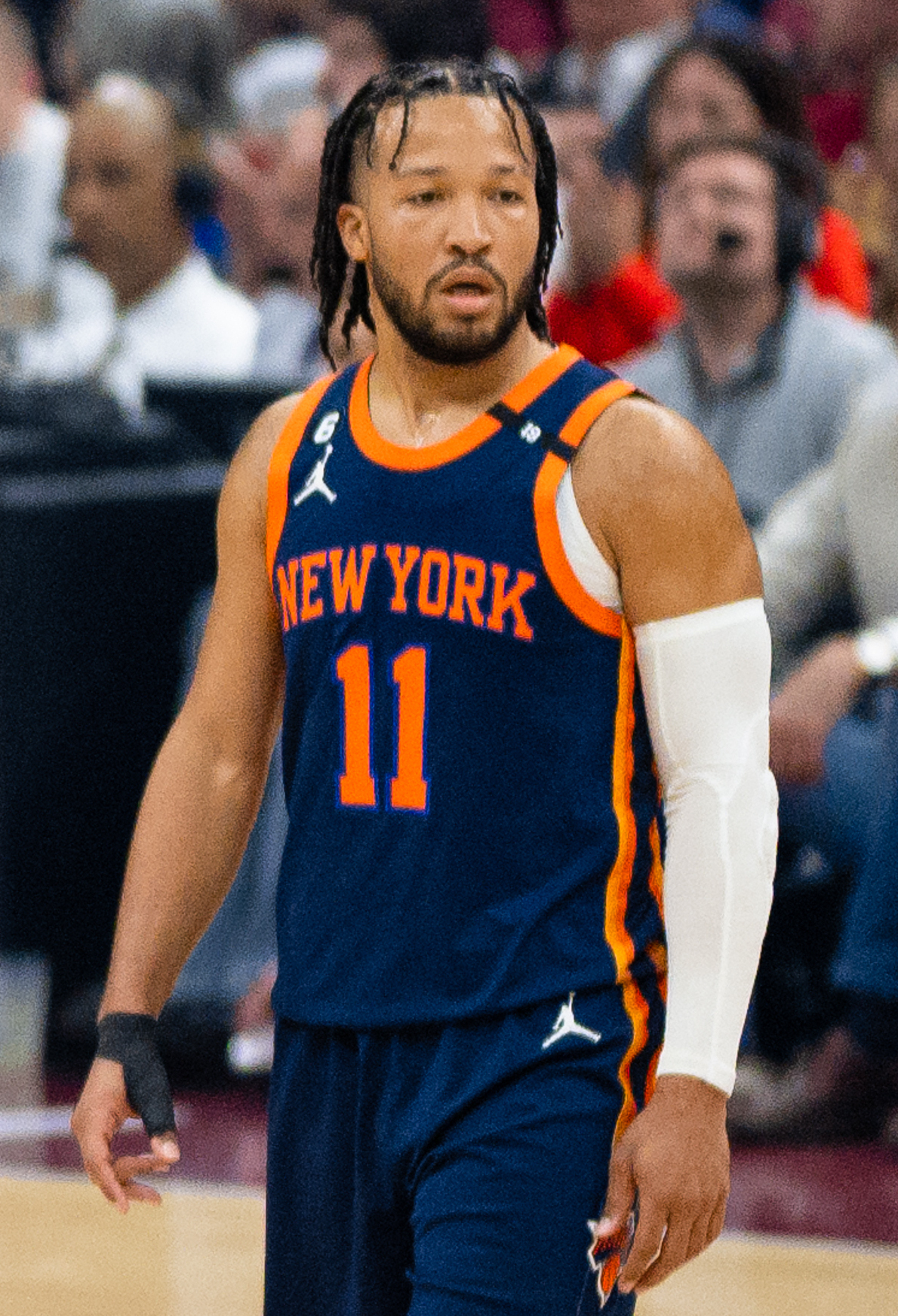
Team captain Jalen Brunson, ever the martyr for analytical accountability, refused to deflect the regression onto systemic anomalies. The point guard bluntly remarked that the sputtering offense 'falls on my shoulders.' Meanwhile, head coach Tom Thibodeau offered the quintessential coach-speak diagnosis: 'We're not quite there yet.' That is an understated way to describe an offensive scheme currently generating shot quality comparable to an emergency heave at the shot-clock buzzer.
🐦 @KnicksFilmRoom: 'The fourth-quarter shot chart looks like a Jackson Pollock painting if Pollock only used sadness and contested mid-range pull-ups.'
💬 u/BockToBock: 'Ben Stiller says there is a silver lining. The silver lining is that math dictates we literally cannot shoot this poorly from the perimeter forever.'
Tracking the Offensive Decay
To fully grasp how mathematically compromised the Knicks were down the stretch against Orlando's suffocating length, we must peer beneath the surface box scores and inspect the actual operational metrics:
| Metric | First 36 Minutes | Fourth Quarter vs Magic | League Avg Target |
|---|---|---|---|
| Offensive Rating | 114.2 | 86.5 | 113.8 |
| Corner 3-Point Attempt Rate | 11.4% | 2.1% | 9.5% |
| Isolation Possessions / 100 | 14.1 | 27.8 | 8.2 |
| Spike in Heart Rate (BPM) | 72 | 145 | Normal |
When Orlando ratcheted up their perimeter trap pressure, New York's secondary passing mechanics broke down completely. Instead of executing quick skip-passes to punish over-helping defenders, the ball stuck like damp concrete. Isolations spiked, paint penetration vanished, and the shot clock became an apex predator stalking New York on every single possession.
Predictive Models and Fiscal Gambles
Are the Knicks structurally cooked, or is this merely early-season statistical noise? Regression to the mean is a powerful law of nature. Brunson's true shooting percentage will inevitably drift back toward all-star thresholds, and the lineup combinations will gradually smooth out their defensive switch assignments. However, until New York figures out how to score points in the half-court when teams aggressively deny Brunson's primary driving lanes, the ceiling remains strictly capped.
For those navigating the sportsbooks, take the under on Knicks team totals until Thibodeau's five-man rotations show actual signs of fluid motion. Furthermore, look into the prop market for Brunson assist totals: if New York continues to rely on hero-ball bailouts over drive-and-kick distribution, his assist volume will stay artificially depressed. Bet on progress, but hedge for bureaucratic basketball.