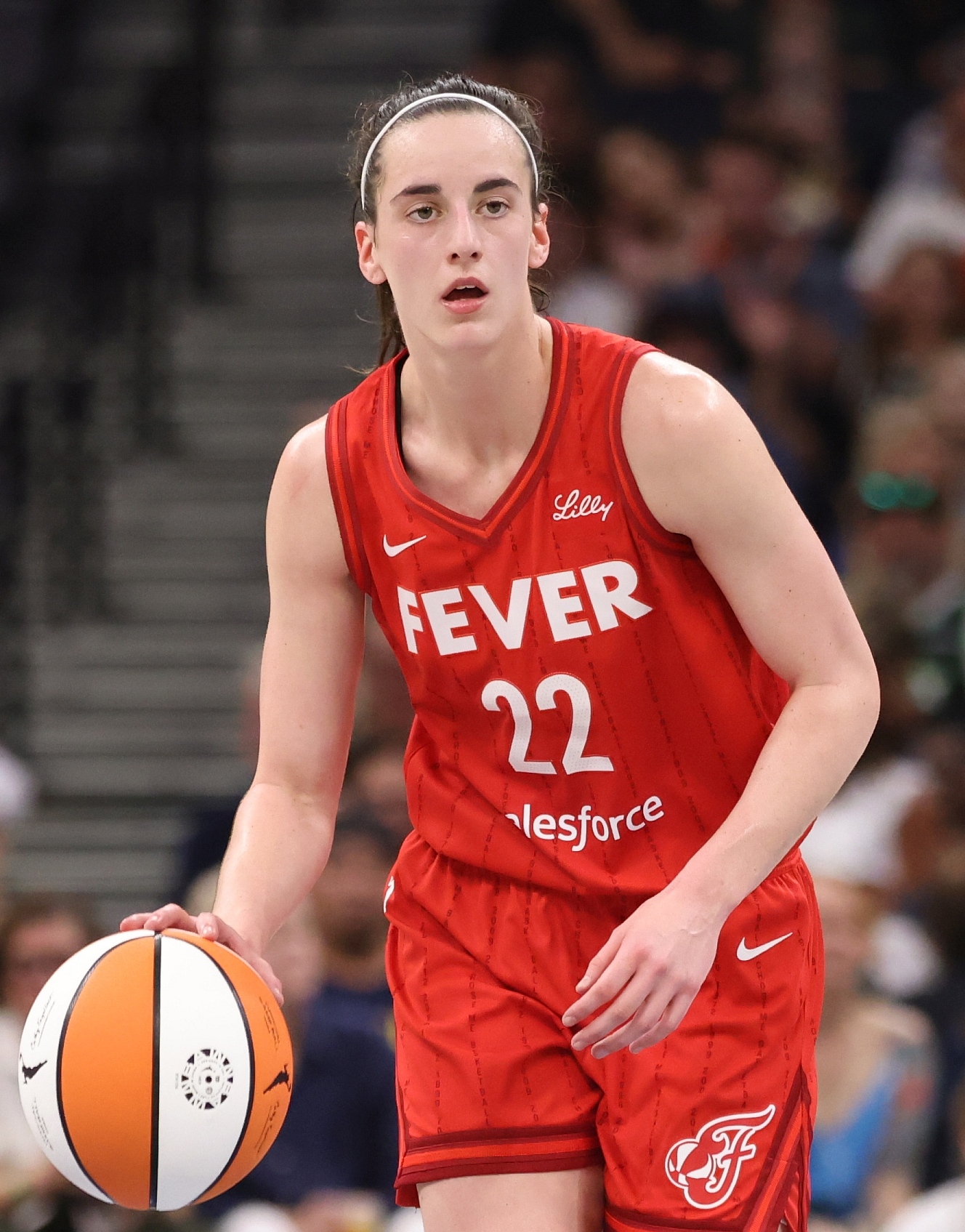
If you enjoy suspense, drama, or the delicate balance of competitive equilibrium, you might want to look elsewhere. The United States women's basketball team just logged their 70th consecutive major tournament victory, turning their FIBA World Cup quarterfinal against Hungary into an algebraic proof of pure dominance. While the NBA remains engulfed in drama worthy of our recent notes on the Clippers, the women's national program continues running on cold, terrifying, robotic efficiency.
The Spatial Dynamics of Total Annihilation
From an analytical perspective, Hungary arrived with an ambitious defensive blueprint: a modified matchup zone designed to pack the paint and bait perimeter heaves. It took precisely three possessions for that plan to collapse into dust. The United States deployed offensive spacing so expansive it effectively bent the geometry of the hardwood.
The headline efficiency metric was driven by the transition chemistry between Caitlin Clark and Angel Reese. Clark operated as an elite passing hub, reading transition blitzes before Hungary could even set their shell defense. Meanwhile, Reese's weak-side rim running and spatial awareness on offensive put-backs completely broke Hungary's low-block rotation metrics. When your secondary break yields uncontested layups and kick-out corner threes at an offensive rating north of 135.0, the opposing coach's whiteboard is effectively obsolete.
🐦 @AnalyticsHoopsNerd: "Hungary tried a 2-3 matchup zone against Clark and Reese as if advanced scouting reports have not existed for the past three calendar years."
💬 u/FloorGeneral44: "Seventy straight wins is not just a streak, it is a statistical anomaly that borders on an international human rights violation."
Quantifying the Hegemony
To truly appreciate how mathematically unfair this squad is performing, consider the tactical output across key operational phases:
| Metric Phase | Hungary Output | Team USA Output |
|---|---|---|
| True Shooting Percentage (TS%) | 38.4% | 64.1% |
| Transition Points / Possession | 0.62 | 1.44 |
| Second-Chance Conversion Rate | 18.2% | 58.9% |
| Defensive Roll Success Rate | 24.0% | 81.5% |
Hungary was suffocated in the half-court. Team USA's perimeter defenders played high-hedge angles that funneled ball-handlers straight into rim protection traps, suffocating passing lanes before skip passes could even leave the hand.
What Lies Ahead in the Semifinals
Spain awaits in the semifinals, and their scouting team is currently tasked with solving a puzzle that has remained unsolved through 70 consecutive competitive iterations. To test the Americans, Spain must slow the game down to sub-70 possessions, exploit non-existent transition lapses, and shoot above 45 percent from beyond the arc. Statistically speaking, those odds mirror drawing an inside straight flush in back-to-back poker hands.
For the sports wagering community, betting against Team USA against the spread remains hazardous to financial health, but alternative prop angles are fascinating. Back the Americans on first-quarter alternate point spreads, hammer the over on team assist-to-turnover ratios, and steer clear of any Hungary-style underdogs hoping to establish low-post offense against this defensive buzzsaw.