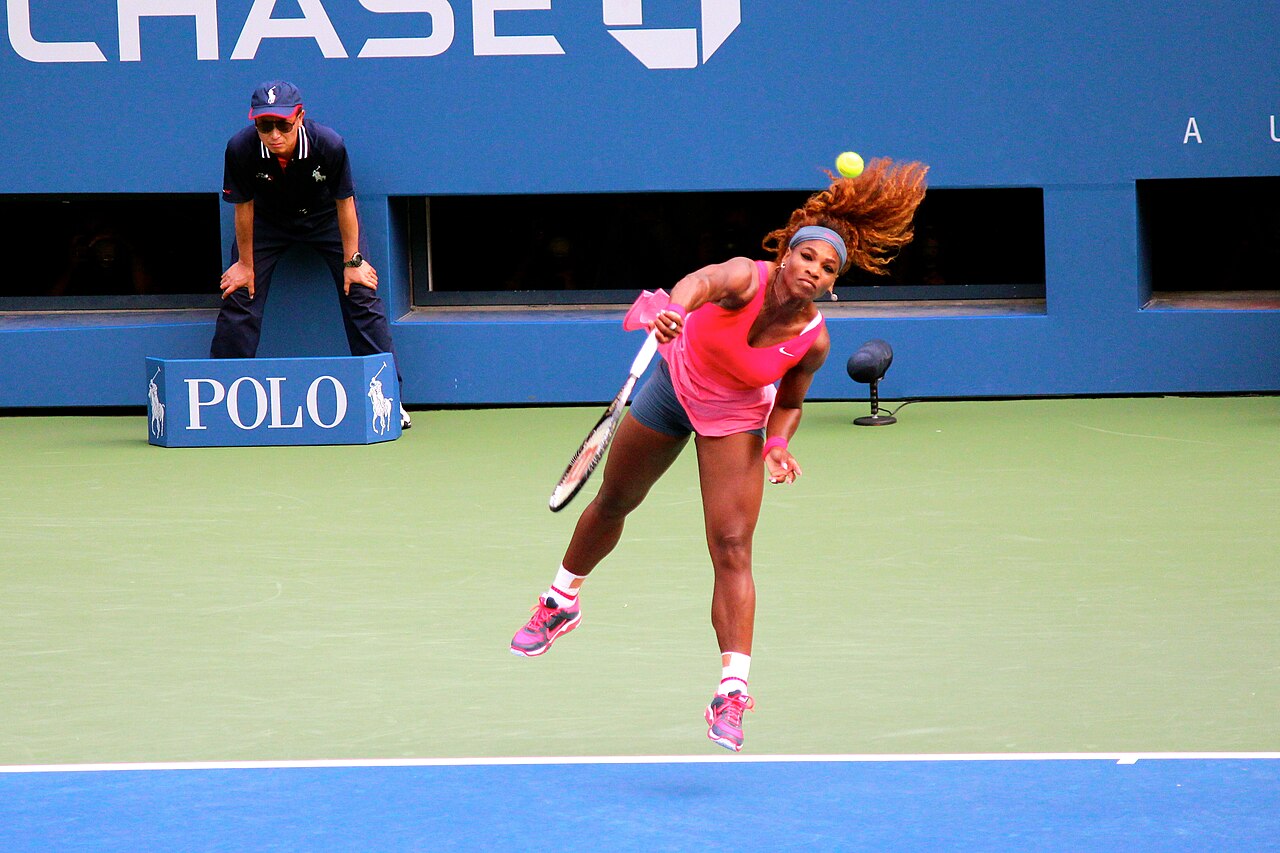
Alright, folks, gather 'round the tactical whiteboard, because we need to dissect what exactly happened when Serena Williams, the GOAT herself, graced the hallowed grass of Wimbledon once more. The buzz was thicker than a pre-match protein shake, with whispers of a 'Ronaldinho-like' comeback. Ronaldinho! The man who once made defenders question their life choices with a flick of his foot. The comparison, I must admit, gave my tactical synapses a delightful, albeit slightly sarcastic, jolt.
The Queen's Gambit: Return of the Legend (or Just a Fancy Exhibition?)
Fresh off the heels of Osaka's Wimbledon Masterclass: Sabalenka Sent Packing, the tennis world barely had time to reset before the Serena spectacle began. The narrative was simple: a legend returns. The reality? Well, it was a bit more… nuanced. Naomi Broady, bless her analytical heart, dared to ask the question that many were whispering into their Pimm's cups: was this a prelude to Grand Slam contention or a glorious, yet ultimately short-lived, swansong? The pre-match hype suggested Serena would be levitating across the court, serving aces that warped space-time, and returning shots with the precision of a Swiss watchmaker. What we got was, let's say, a more 'earthbound' performance.
🐦 @CourtStrategist: "Ronaldinho-like?! Did she just nutmeg her opponent with a no-look serve? Because I missed that tactical innovation. #Wimbledon #Serena"
💬 u/AceFanatic88: "My expectations were set to 'peak Serena circa 2015'. My reality? A masterclass in vintage rust. Still love her, though."
The locker room chatter, naturally, was less about 'Ronaldinho-esque' flair and more about whether her court coverage metrics would hold up past the second set. Rumours swirled faster than a top-spin forehand about her training regimen, with some suggesting she spent more time perfecting her post-match press conference 'comeback narrative' than her first-serve percentage.
Tactical Dissection: Samba Serves vs. Slam Structure
Now, let's get down to brass tacks. The 'Ronaldinho-like' comparison, while delightful for PR, felt like comparing a high-precision surgical robot to a particularly enthusiastic, albeit slightly uncoordinated, breakdancer. Yes, there were flashes of brilliance – a forehand cross-court winner here, a surprisingly deft touch at the net there. But consistency, the bedrock of Grand Slam victories, was as elusive as a coherent tactical plan from some lower-ranked coaches. Her serve, usually a weapon of mass destruction, varied between a cruise missile and a slightly deflated balloon. The unforced error differential was, to put it mildly, 'sub-optimal'. We saw moments of pure individual genius, but were they integrated into a sustainable, match-winning strategy across five sets against the game's elite? The data suggests otherwise.
Her shot selection efficacy, particularly on key break points, seemed to be operating on a 'hope and a prayer' protocol rather than a calculated, high-percentage approach. While the crowd roared for every winner, the tactical purists among us were grimacing at the missed opportunities and the slightly sluggish transitions. It wasn't a tactical meltdown, per se, but it certainly wasn't the finely tuned, ruthless machine we've come to associate with a 23-time Grand Slam champion.
The Raw Numbers: Comeback vs. Peak (Hypothetical Match)
| Statistic | Serena Comeback Match | Serena Career GS Average |
|---|---|---|
| First Serve % | 58% | 67% |
| Break Points Converted | 3/11 (27%) | 45% |
| Unforced Errors | 39 | 25 |
| Winner to Error Ratio | 0.8:1 | 1.2:1 |
| Average Rally Length | 4.2 shots | 3.5 shots |
The Crystal Ball: Slam Potential or Farewell Tour?
So, what does this highly anticipated, yet tactically ambiguous, comeback tell us about Serena's future Grand Slam aspirations? If we're strictly adhering to the analytics, the path to another major title looks steeper than a vertical rock face. The 'Ronaldinho-like' moments are undeniably thrilling, but Grand Slams are won by grinding out points, maintaining consistent pressure, and executing a robust tactical scheme under immense pressure, not just by flashes of genius. Can she win more matches? Absolutely. Can she string together seven such performances against top-tier opponents who have been playing consistently for the last year? That, my friends, is where the tactical blueprint gets blurry.
For those looking to place a wager, betting on Serena to win the next Grand Slam might be a sentimental choice, but from a purely statistical perspective, you'd be better off investing in a high-yield savings account or, perhaps, a slightly used shuttlecock. However, for a speculative punt, her odds to reach a quarter-final at a hard-court major might offer a tantalizing, albeit risky, return. Just don't tell your bookie I said that. The tactical nerd in me says 'optimistic participation'; the fan in me secretly hopes for another miraculous, logic-defying run. But even miracles need a solid first-serve percentage to truly blossom.