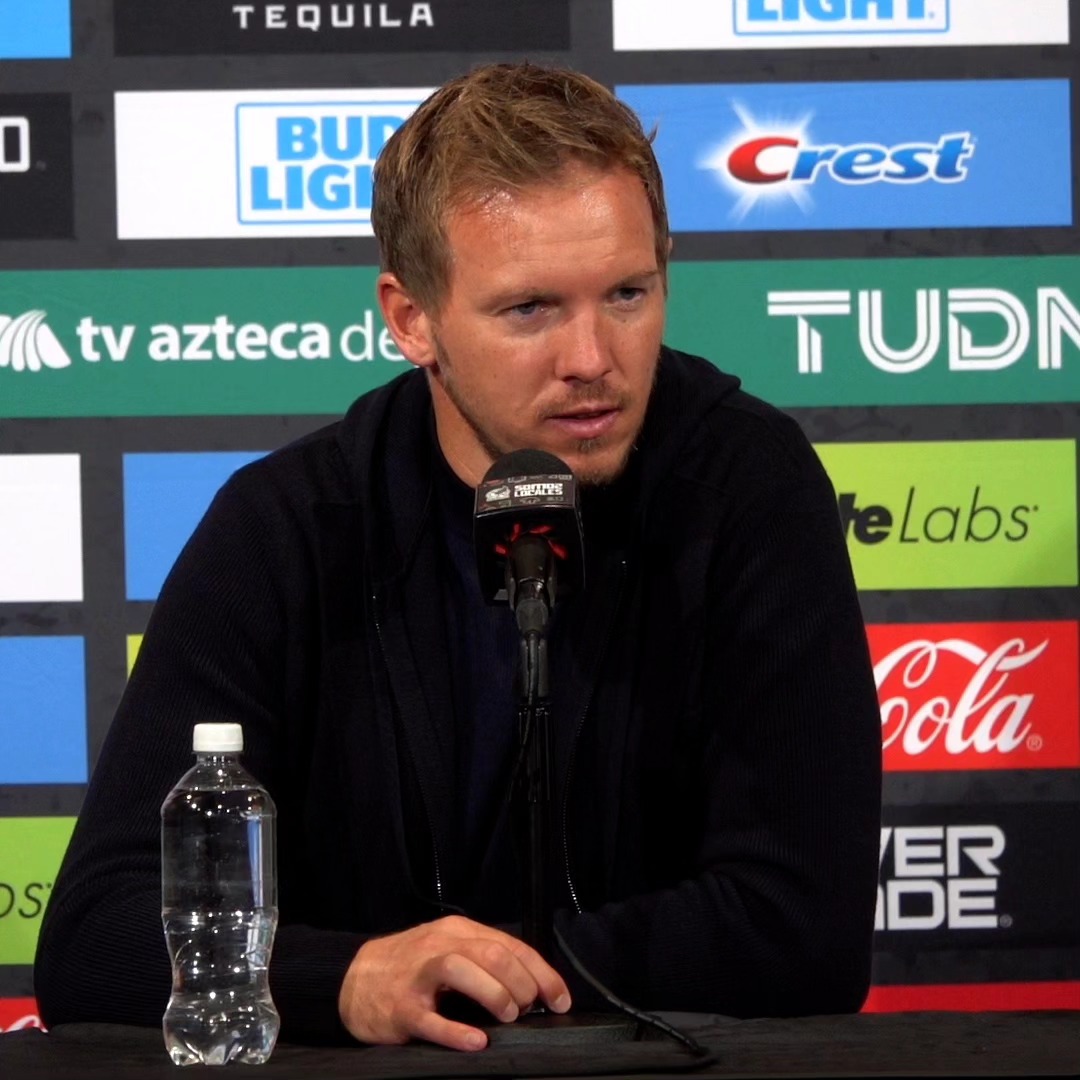
Well, folks, it finally happened. The tactical chessboard in German football has been violently overturned, and the pieces are scattered like a poorly executed low block against a gegenpressing juggernaut. Julian Nagelsmann, the boy wonder turned sacrificial lamb, has formally parted ways with the German national team. One might say the 'disaster' mentioned in the New York Post was less a natural catastrophe and more a slow-motion tactical implosion visible from space.
Whispers from the training ground suggest the 'philosophical differences' were less about grand tactical visions and more about whether a 3-4-2-1 formation truly thrives when your key midfielders are playing 'pass the hot potato' with the defensive line. After a World Cup campaign that saw Germany exit with all the grace of a brick through a stained-glass window – a performance that made 'Portugal Wins World Cup Thriller: Pure Chaos!' seem like a perfectly choreographed ballet – the writing was on the wall. The post-match pressers felt less like tactical dissections and more like hostage negotiations. Players reportedly started referring to certain drill sets as 'Nagelsmann's Labyrinth' – complex, confusing, and ultimately leading nowhere.
🐦 @BundesligaBrain: "Honestly, Nagelsmann's departure was less a surprise and more an inevitability. The xG was screaming 'fire sale' since Qatar. #DFB #TacticalTurmoil"
💬 u/GegenpressingGuru: "I heard Flick's ghost was still haunting the tactical board room, whispering 'fluidity' while Nagelsmann tried to implement an inverted full-back system with a false nine. Chaos!"
The tactical choices in the World Cup were, to put it mildly, 'bold' – if 'bold' means 'borderline suicidal'. The defensive transitions were often non-existent, leaving acres of space for opponents to exploit. The midfield seemed to operate on a different frequency to the attack, resulting in disjointed build-up play and a severe lack of penetration. It was a masterclass in how not to implement modern possession-based football. The statistical breakdown below paints a rather grim picture of their World Cup 'adventure'.
World Cup Woes: A Deeper Dive Into Germany's Dismal Metrics
| Metric | Germany (WC 2022) | Average Top 8 Team (WC 2022) | Tactical Implication |
|---|---|---|---|
| Avg. Possession | 67% | 55% | High possession, low conversion. Sterile dominance. |
| xG Conceded per Game | 1.8 | 0.9 | Defensive fragility, poor press structure. |
| Shots on Target per Game | 4.2 | 6.5 | Lack of cutting edge, predictable attacks. |
| Defensive Duels Won % | 48% | 61% | Individual defensive shortcomings, easily bypassed. |
| Progressive Passes per 90 | 58 | 72 | Conservative passing, reluctance to break lines. |
As these numbers starkly illustrate, Germany's tactical framework under Nagelsmann was a paradox: high possession without control, and an attack that flattered to deceive. It was like owning a Ferrari but only driving it in first gear, occasionally forgetting to use the brakes.
Now, the rumor mill is spinning faster than a winger on a counter-attack. Jurgen Klopp's name is being bandied about with all the enthusiasm of a striker eyeing an open goal. Fresh off the heels of the 'Kane's Class, England's Mess: World Cup Warning!' narrative, one might wonder if Germany is eyeing a similar charismatic figure to inject some much-needed passion and tactical clarity. Klopp's high-octane, 'heavy metal' football could be the defibrillator German football desperately needs after its recent flatline. Betting markets have already shifted dramatically. For the savvy punter, I'd say a cheeky wager on 'Klopp to manage Germany by end of 2024' at anything above evens is a steal. Also, consider 'Germany to reach Euro 2024 semi-finals' if Klopp is confirmed – the 'new manager bounce' combined with actual tactical coherence could be potent. Just imagine the gegenpressing! The opposition midfielders will need oxygen masks.