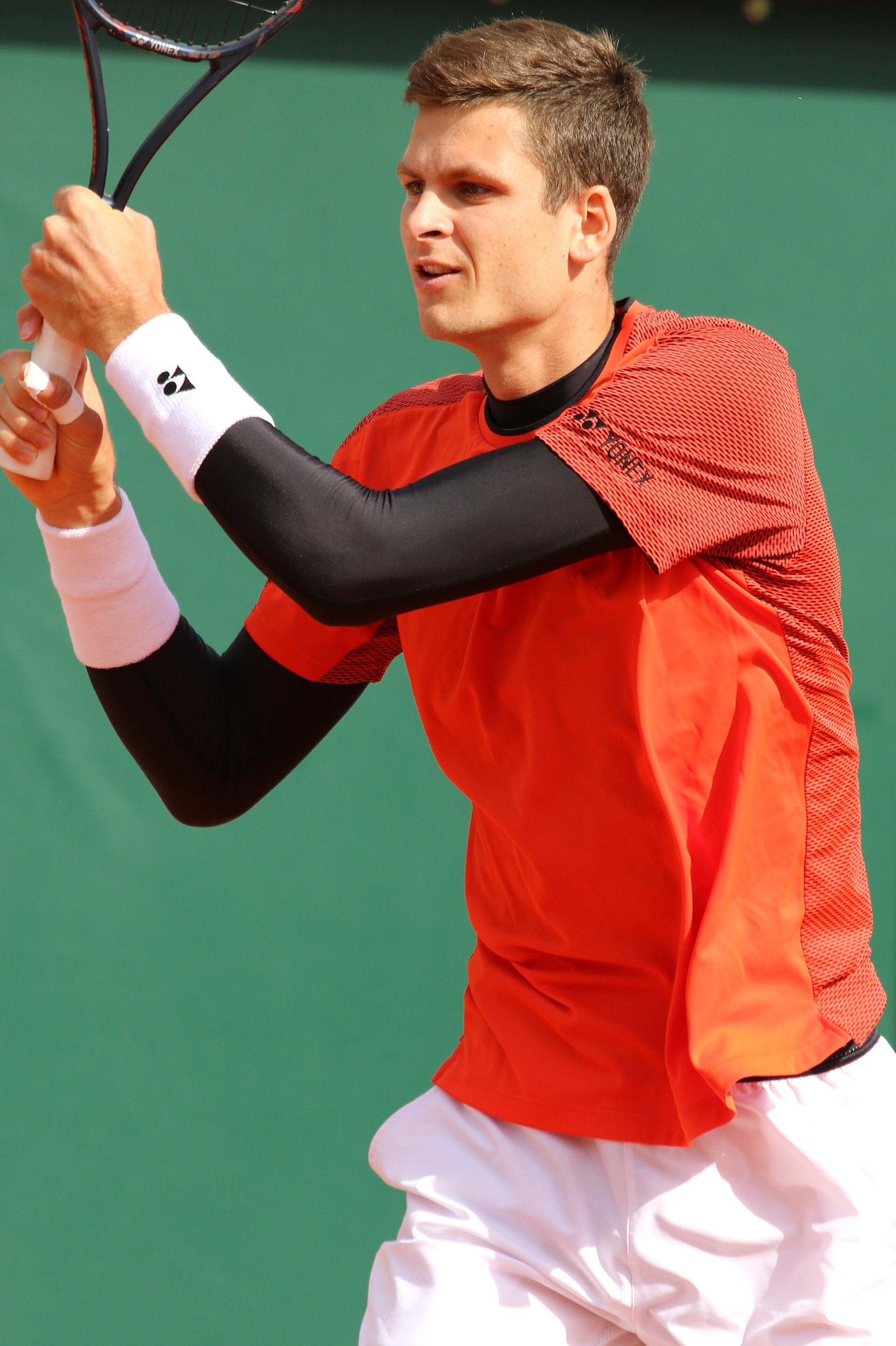
When tennis analysts boot up their telemetry models, Novak Djokovic is generally treated as an immutable baseline constant. His baseline depth, defensive retrieval radius, and unreturned serve return rate operate with the predictable precision of automated code. Hubert Hurkacz clearly did not read the documentation. In an astonishing display of ballistic ball-striking, the towering Pole dismantled the 24-time Grand Slam champion in the early rounds of the Shanghai Masters, shutting down Djokovic's quest to tie Roger Federer's tournament legacy before the tournament even properly caught fire.
The Serve-Plus-One Geometric Siege
This was not a match dictated by sentimental narrative; it was resolved by unyielding trigonometry. Hurkacz turned the Shanghai hardcourt into a high-speed launch corridor. By generating release angles that forced Djokovic's return contact point over two feet outside his preferred strike zone, the Pole completely neutralised the greatest return of serve in the history of the sport. Hurkacz refused to enter the marathon 15-shot baseline exchanges where Djokovic regularly suffocates opponents; instead, he suffocated the tempo with ruthless serve-plus-one executions.
🐦 @CourtVisionGeek: "Hurkacz did not just defeat Novak, he corrupted his hard drive. Zero rhythm allowed, pure kinetic violence on the first strike."
Djokovic appeared tactically stranded. The Serbian maestro attempted to alter court positioning, retreating deeper to buy milliseconds of reaction time, but the math refused to cooperate. Every defensive slice was answered by Hurkacz stepping inside the baseline, aggressively flattening out forehands, and extinguishing potential break point leverage before a rally could mature into a tactical chess match.
Telemetry Breakdown: How The Numbers Crushed The King
A closer inspection of the underlying match metrics illustrates how decisively Hurkacz severed Djokovic's usual control vectors:
| Tactical Metric | Novak Djokovic | Hubert Hurkacz |
|---|---|---|
| 1st Serve Unreturned Rate | 31% | 54% |
| Points Lasting < 4 Shots Won | 42% | 58% |
| Forehand Contact Depth | 1.4m behind baseline | 0.3m inside baseline |
| Break Point Conversion | 1 of 5 (20%) | 3 of 4 (75%) |
As illustrated by the data, Hurkacz completely dominated the micro-rallies. By winning 58% of points that concluded in under four shots, he effectively starved Djokovic of the physical grind that usually exhausts opponents into submission.
💬 u/DeuceCourtPhilosopher: "Novak's movement looked uncharacteristically mortal. If you do not let him lock into cross-court patterns, the software suddenly experiences a fatal error."
Analytical Forecast and Irresponsible Betting Angles
This statistical anomaly raises fascinating tactical questions for the remainder of the autumn indoor swing. With Djokovic's margin of error thinning against elite servers executing high-variance strategies, his scheduling cadence will undergo intense scrutiny. For Hurkacz, reproducing this level of unreturned serve frequency is mathematically improbable over an entire fortnight, but in Shanghai, lightning struck with absolute geometric clarity.
For the degenerate sports-wagering community, here are our highly unscientific analytical projections: take the over on Hurkacz hitting at least eighteen aces in his next fixture (-150), and aggressively short any future prop bets projecting Djokovic to cruise through early rounds without dropping a tiebreak this autumn (+220). If you must bet, put your capital on the server who treats the baseline like an unnecessary architectural suggestion.