When a football game necessitates meteorological alerts and public clarifications regarding military deployment, you know the expected points added (EPA) per play model is about to experience severe turbulence. Ahead of the high-stakes SEC showdown between Ole Miss and LSU, Mississippi Governor Tate Reeves took to the podium to warn citizens of an impending Category 5 phenomenon: 'Hurricane Kiffin.' While Oxford United recently apologized for a horrendous shirt launch across the Atlantic, Oxford, Mississippi is bracing for a wardrobe malfunction of an entirely different, crimson-and-powder-blue variety as over 300,000 visitors descend upon the Grove.
Tactical Meteorology and Crowd Logistics
From an operational standpoint, deploying the National Guard to support local law enforcement during a college football weekend sounds less like game preparation and more like contingency management for a defensive scheme breakdown. The governor had to formally clarify the Guard's presence, ensuring that troops were strictly there for traffic control and perimeter containment, rather than auditioning for sub-package reps in an undersized Cover-3 shell against Lane Kiffin's hyper-tempo passing concepts.
🐦 @FilmRoomSEC: 'If your defensive coordinator requires civil support assets just to prevent pre-snap motion confusion, you are already losing the spatial battle.'
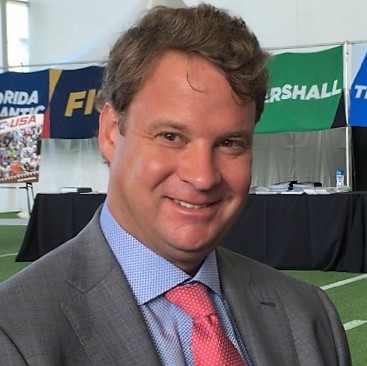
The tactical tension is palpable. Kiffin's offenses thrive on horizontal spacing that stresses boundary cornerbacks and forces safeties into suboptimal run-fit angles. Facing LSU requires precise diagnostic efficiency, particularly when accounting for deep-shot shot chart distributions and split-safety reads. Pundits have weighed in heavily, with media personality Colin Cowherd mocking the collective anxiety in Mississippi by noting that Ole Miss acts like someone who simply cannot move past an ex, claiming Kiffin is perpetually living rent-free in their schematic psyche.
The Spatial War: By The Numbers
| Analytical Metric | Ole Miss Offense | LSU Defense Matchup |
|---|---|---|
| Early-Down Success Rate | 51.4% | Neutralizing standard run-fits |
| Pre-Snap Motion Frequency | 38.2% | Zone-eye discipline vulnerability |
| Air Yards Per Attempt | 9.6 | Safety depth at 14+ yards required |
| Atmospheric Chaos Factor | Extreme | Governor-level mobilization |
The statistical challenge for LSU lies in limiting explosive plays when Kiffin dials up mesh concepts designed to exploit zone transitions. When linebackers bite on play-action, the vacated intermediate zone turns into prime real estate. If the Tigers fail to set a firm edge on pin-and-pull concepts, Kiffin's attack will dictate the leverage battle all afternoon.
💬 u/GridironGeek88: 'You cannot game-plan for a coach whose playbook is 50 percent RPO math and 50 percent high-grade chaos engine.'
Forecast and Calculated Wagers
What does this mean for the outcome inside Vaught-Hemingway Stadium? Analytically, games framed by this degree of atmospheric hyperbole often regress to red-zone conversion percentages and turnover margins. If LSU cannot generate organic pass rush with four down linemen, their back seven will be dissected across the boundary seams.
For the speculative wagering community, consider the smart money on alternate overs if the opening possession produces points in fewer than six plays. From a prop perspective, take the over on camera cutaways to the governor looking distressed, and hammer the line on pre-snap illegal formation penalties caused by pure decibel overload. Hurricane Kiffin is officially on radar, and standard coverages will not survive the gale-force tempo.