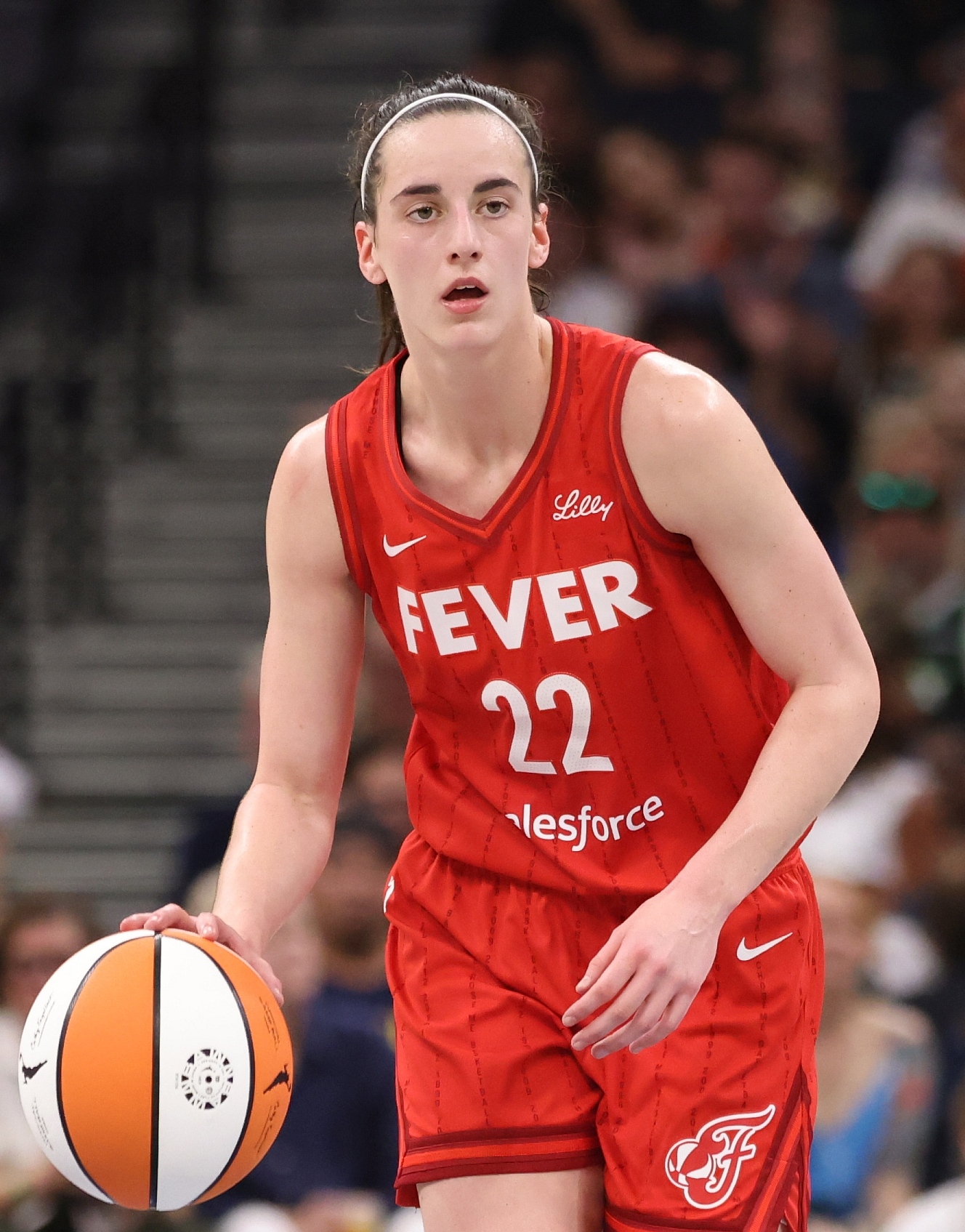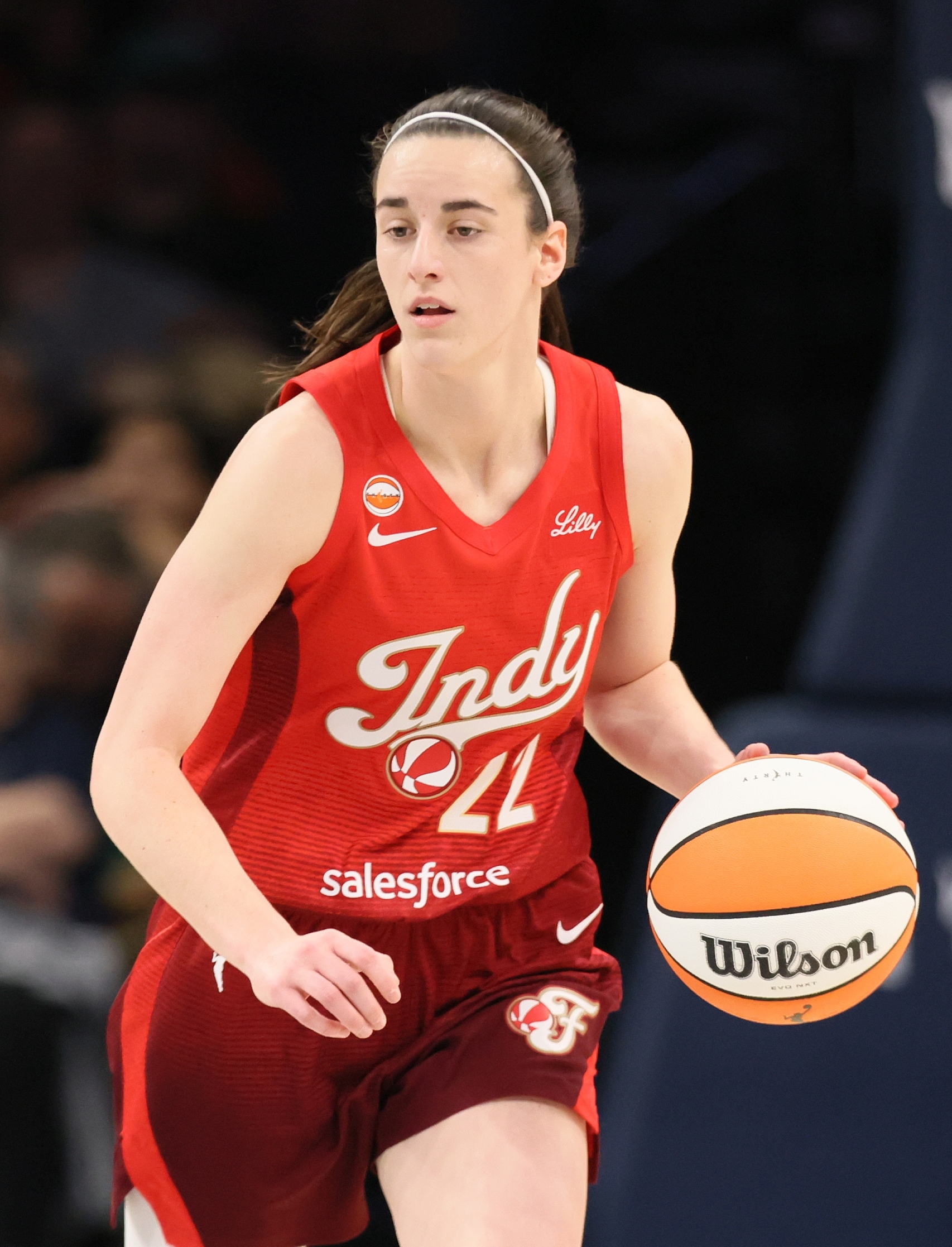
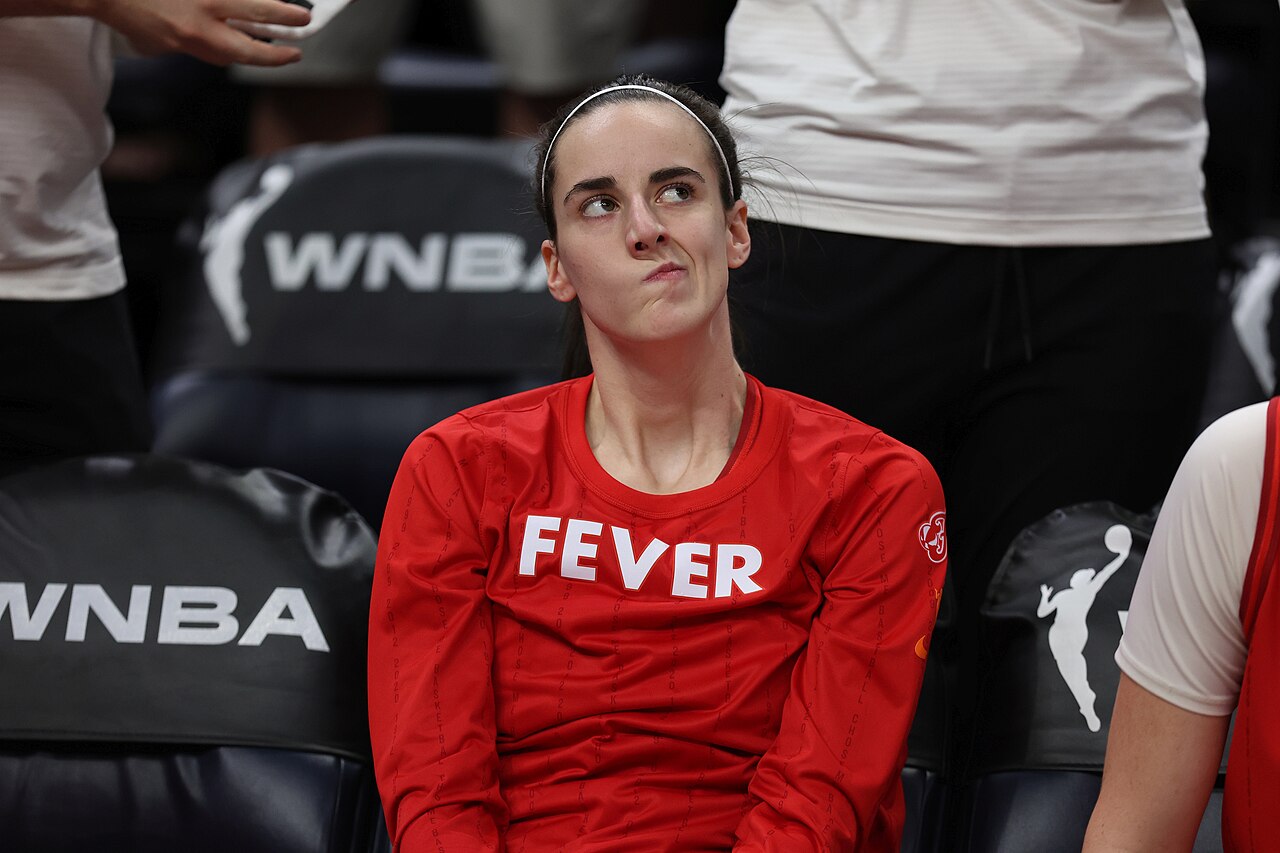
Caitlin Clark, the WNBA's prime-time protagonist, recently dropped a bombshell on the league's collective consciousness: 'I'm not a robot.' News flash, folks! The sentient, long-range targeting system we all assumed was merely a highly advanced AI, capable of processing defensive rotations faster than a supercomputer crunching quantum physics, turns out to be… an actual human being. Who knew? This revolutionary revelation comes fresh off a week where the collective internet, and several WNBA defenders, seemed to be testing the limits of her bio-mechanical resilience.
Beyond the Algorithm: Clark's Human Interface Malfunction
Her statement, delivered with the calculated precision of a perfectly executed cross-court pass, follows the latest incident in a saga that’s less 'rookie season' and more 'gladiatorial combat.' We're, of course, referring to the infamous throat-punching incident involving Connecticut's Alyssa Thomas – a defensive maneuver that, while certainly impactful, registered rather high on the 'questionable intent' scale of our proprietary foul-metrics system. Just weeks after the inexplicable tactical oversight that saw her excluded from the initial All-Star ballot – a decision our algorithms still flag as a 'critical error in judgment,' as discussed in 'Clark Snub Rocks WNBA All-Star Vote!' – Clark is now forced to remind everyone of her biological composition. The locker rooms are buzzing; whispers of 'tactical aggression' versus 'flagrant disregard' are echoing louder than a misfired buzzer-beater. Social media, a bastion of nuanced sports discourse, as always, weighed in:
🐦 @HoopsAnalyticsGuru: "The league's defensive schematics against Clark are evolving from 'containment' to 'controlled demolition.' Fascinating, if slightly barbaric."
💬 u/CourtSideStrategist: "If this is the 'physicality' everyone lauded, then my grandma's bingo night is the NBA Finals. The data doesn't lie: targeted aggression, not strategic defense."
Defensive Schemes, Offensive Realities, and Unintended Consequences
From a purely tactical standpoint, the WNBA's approach to Clark has been a fascinating, if sometimes brutal, case study. Opponents are employing high-pressure, often physical, man-to-man coverage, frequently transitioning into double-teams designed to disrupt her offensive rhythm and deny her preferred perimeter launch zones. While statistically effective at times in reducing her assist numbers, the trade-off appears to be a heightened foul count and a growing public perception of 'dirty play.' This strategy, while perhaps maximizing defensive efficiency against a singular offensive threat, inadvertently elevates the meta-narrative surrounding Clark's treatment, often overshadowing the actual on-court tactical battles. It's a high-risk, high-reward gambit that, while yielding some defensive dividends, seems to be generating an alarming amount of negative PR-xG (Public Relations Expected Goals) for the league.
Hot Takes from the Tactical Bunker:
- The 'Clark Effect' is real: Her presence is forcing defensive coordinators to rethink their entire playbook, often leading to over-committing personnel.
- Officiating: A Variable Coefficient: The interpretation of 'physicality' vs. 'foul' remains inconsistent, creating a chaotic system for offensive players to navigate.
- The 'Target Theory': Is it a legitimate strategy to disrupt a primary ball-handler via persistent, borderline-legal contact, or simply an exploitation of officiating ambiguity? Our models lean towards the latter.
- The Fan Factor: The current discourse is alienating casual viewers who tuned in for elite basketball, not a WWE pay-per-view.
The Meta-Narrative: League Discourse and Future Patch Notes
What does Clark's 'not a robot' plea mean for the tactical landscape moving forward? Firstly, expect continued scrutiny on officiating. The league's internal algorithms for foul calls will undoubtedly be under intense pressure to standardize, lest they be accused of bias or, worse, incompetence. Opposing coaches will face a dilemma: continue the hyper-physical approach and risk further league intervention (or public outcry), or dial it back, potentially allowing Clark more operational freedom. For the Fever, this means tactical adjustments. Can they leverage the aggressive defensive schemes against Clark to create open looks for others? The offensive flow must evolve from a singular point of initiation to a more distributed attack vector.
For the astute wagerer, consider the 'Over' on technical fouls in Fever games. The probability matrix suggests a high correlation between increased physicality and frustrated officials. Also, a speculative bet on 'league-mandated officiating workshops' might not be a bad long-shot. The WNBA is at a critical juncture; its code needs a serious patch update to ensure the game remains a skill-based competition, not a test of physical endurance against questionable contact. After all, even the most advanced AI needs a fair operating environment.