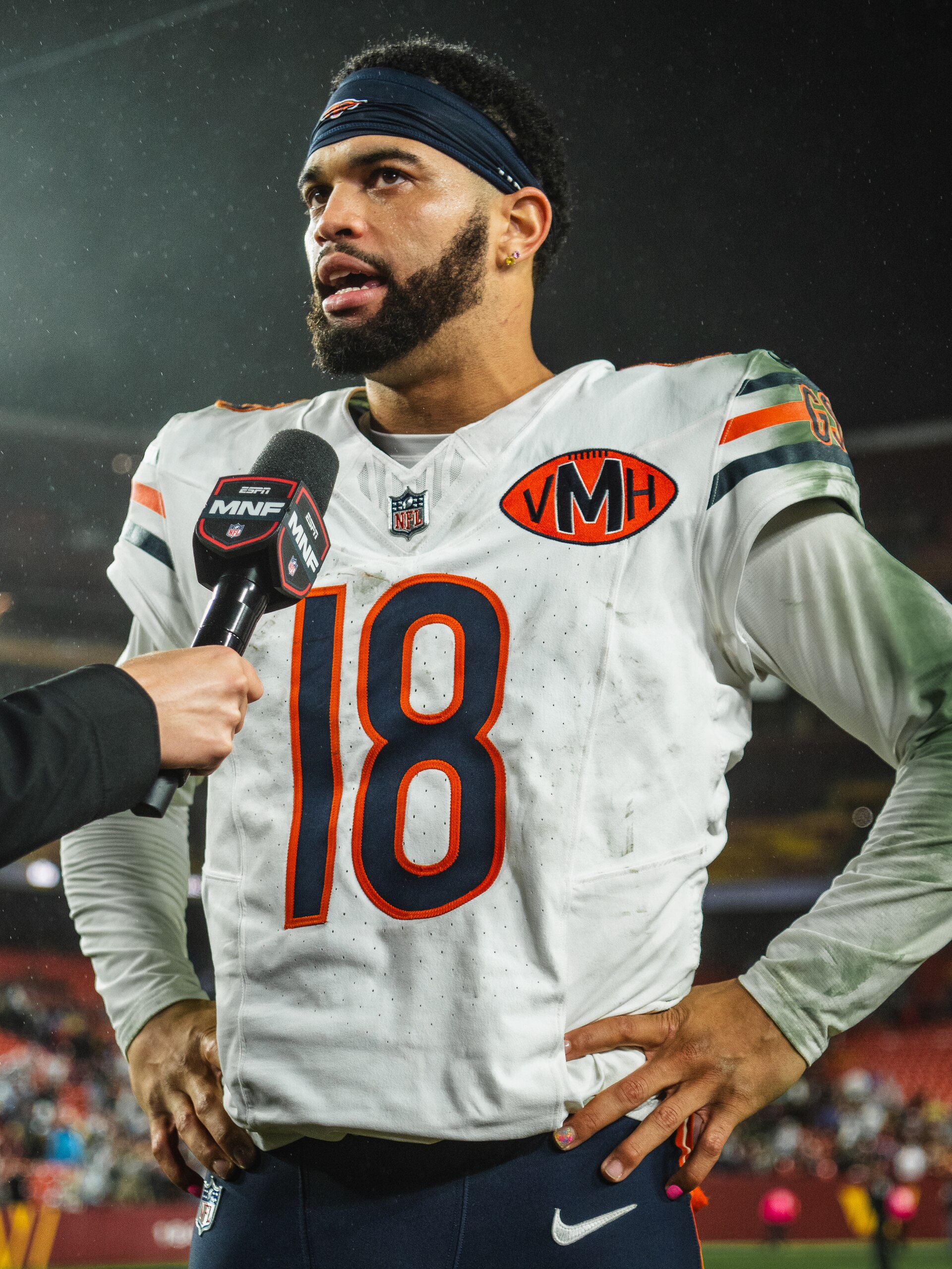
If you run a statistical regression model on Chicago sports optimism, the resulting curve resembles a sheer cliff drop. Just days after rookie peer news when we saw how Jayden Daniels Dodges IR Nightmare In DC!, the football gods looked at Lake Michigan and decided Chicago had enjoyed comfortable quarterback depth for far too long. On Friday, both franchise savior Caleb Williams and trusted backup Tyson Bagent were absent from practice, sending the entire Bears offensive matrix into full system overload.
The Clipboards Fall to Case Keenum
When QB1 and QB2 vanish from the Friday walk-through ahead of a brutal tilt against the Philadelphia Eagles, offensive coordinators typically stare at their Microsoft Surface tablets and begin calculating expected points added (EPA) per punt. Caleb Williams, nursing an ailment, left a vacuum under center that Bagent would normally backfill. With Bagent also sidelined, the emergency protocol engaged, activating 37-year-old journeying veteran Case Keenum.
Keenum practiced earlier in the week and proclaimed himself ready to operate the scheme if called upon. From a tape perspective, swapping Williams for Keenum represents a drastic shift in offensive architecture. You go from off-platform scrambles and 60-yard honey-hole throws to immediate checkdowns, max protect slide protections, and praying your slot receiver can generate three yards after catch.
🐦 @WindyCityData: "Going from Caleb Williams off-script wizardry to Case Keenum high-percentage dink-and-dunk is like switching from an overclocked RTX 4090 to integrated laptop graphics."
💬 u/DitkaAlgorithm: "My spreadsheets are weeping. If Philly rushes five against our backup protection scheme, the ball has to leave Keenum hands in 1.8 seconds flat."
Analytical Comparison: The Pivot Under Center
Here is how the operational metrics shift dramatically based on who actually takes the snaps against Philadelphia:
| Metric Profile | Caleb Williams | Case Keenum |
|---|---|---|
| Average Time to Throw | 2.98s (Extended Chaos) | 2.35s (Quick Rhythm) |
| Deep Ball Frequency (>20 yds) | 14.2% | 6.1% |
| Off-Platform Creation EPA | +0.18 | -0.34 |
| Protection Scheme Demand | High (Needs escape lanes) | Low (Prefers 5-man slide) |
Tactical Fallout Against Philly Defense
The Philadelphia front seven does not care about your clipboard woes. Vic Fangio style shell coverages prey precisely on quarterbacks who lack vertical velocity to punish deep split-safeties. If Williams cannot suit up, Chicago must run heavy 12-personnel, rely on condensed formations, and hope their running backs can churn out positive EPA against light boxes. Keenum possesses the cerebral processing to manage pre-snap protection calls, but against exotic blitz looks, processing power means little without escapability.
Algorithmic Betting Forecast
From an analytical betting standpoint, the smart money moves fast. Take the Under on Chicago team total passing yards, because regardless of who suits up, the offensive game plan will resemble 1940s ground-and-pound football. For exotic prop enthusiasts, hammer the over on running back checkdown receptions at 5.5, and sprinkle a small wager on Keenum throwing at least two screen passes on 3rd-and-long situations. The algorithm never lies: Chicago faces pure defensive friction on Sunday.